Language:en 
- zh-cn
- en
- ja
- fr
- ko
- de
- pt-pt
- es
FLAM Electronics



Power resistors are electrical components designed to limit current flow, divide voltages, and dissipate energy in the form of heat. Unlike standard resistors, power resistors are built to handle higher power levels, making them essential in various applications where heat management and reliability are critical.
In electrical circuits, power resistors play a vital role in ensuring the stability and functionality of devices. They are used in power supplies, motor drives, and various electronic equipment to manage energy efficiently. Their ability to withstand high temperatures and power levels makes them indispensable in industrial and commercial applications.
This article will explore the different types of power resistors, their characteristics, applications, and factors to consider when selecting the right resistor for specific needs. By understanding the various product types available, engineers and designers can make informed decisions that enhance the performance and reliability of their circuits.
Power resistors are designed to handle significant amounts of electrical power while maintaining their performance characteristics. They serve various functions, including current limiting, voltage division, and energy dissipation. Their primary purpose is to convert electrical energy into heat, which is then dissipated into the surrounding environment.
Key characteristics of power resistors include power rating, resistance value, tolerance, temperature coefficient, and thermal management capabilities. These factors determine how well a resistor can perform under specific conditions and its suitability for various applications.
Power resistors have a higher power rating compared to standard resistors, allowing them to handle more significant amounts of current and voltage without overheating or failing.
Power resistors are designed with enhanced thermal management features, such as heat sinks or ceramic substrates, to dissipate heat effectively. This is crucial for maintaining performance and preventing damage.
While standard resistors are often used in low-power applications, power resistors are employed in high-power environments, such as industrial machinery, automotive systems, and power electronics.
Wirewound resistors are made by winding a resistive wire around a ceramic or fiberglass core. The wire is typically made of materials like nickel-chromium or copper-nickel alloys, which provide excellent thermal stability.
Wirewound resistors offer high power ratings, excellent stability, and low noise. However, they can be larger and more expensive than other types of resistors, and their inductance can be a concern in high-frequency applications.
These resistors are commonly used in power supplies, motor control circuits, and audio equipment, where high power handling and stability are required.
Thick film resistors are created by printing a resistive paste onto a ceramic substrate and then firing it at high temperatures. This process allows for precise control over resistance values.
Thick film resistors are known for their compact size, low cost, and good power handling capabilities. They typically have a power rating ranging from a few watts to several hundred watts.
These resistors are widely used in consumer electronics, automotive applications, and industrial equipment due to their versatility and cost-effectiveness.
Thin film resistors are manufactured using a different process, where a thin layer of resistive material is deposited onto a substrate. This results in higher precision and stability compared to thick film resistors.
Thin film resistors offer excellent temperature coefficients and low noise, making them ideal for applications requiring high accuracy and reliability.
They are commonly used in precision measurement devices, instrumentation, and high-frequency applications where performance is critical.
Metal film resistors are made by depositing a thin layer of metal onto a ceramic substrate. This construction provides a stable resistance value and low temperature coefficient.
Metal film resistors offer high precision, low noise, and excellent stability. However, they may have lower power ratings compared to wirewound resistors.
These resistors are often used in audio equipment, precision amplifiers, and other applications where accuracy is paramount.
Ceramic resistors are known for their ability to withstand high temperatures and harsh environments. They are often used in applications where thermal stability is crucial.
These resistors are commonly found in automotive, aerospace, and industrial applications where they can endure extreme conditions without compromising performance.
Composite resistors are made from a combination of materials, such as carbon and metal oxides, to achieve specific performance characteristics.
These resistors offer a balance between power handling, stability, and cost, making them suitable for various applications.
Composite resistors are used in automotive, telecommunications, and consumer electronics, where a combination of performance and cost-effectiveness is required.
High-power resistors are designed to handle significant power levels, often exceeding several kilowatts. They are built with robust materials and thermal management features.
These resistors are commonly used in industrial applications, such as motor drives, power supplies, and load testing.
Precision resistors are designed for applications requiring high accuracy and stability. They are often used in measurement and calibration equipment.
These resistors are essential in laboratory settings, instrumentation, and any application where precise measurements are critical.
Load resistors are used to simulate a load in testing and simulation environments. They help engineers evaluate the performance of power supplies and other equipment.
These resistors are commonly used in research and development, as well as in manufacturing testing processes.
Current sensing resistors are used to measure current flow in a circuit. They provide feedback for monitoring and control purposes.
These resistors are widely used in automotive systems, power electronics, and renewable energy applications, where accurate current measurement is essential.
When selecting a power resistor, it is crucial to consider its power rating and thermal management capabilities to ensure it can handle the required load without overheating.
The resistance value and tolerance determine how accurately the resistor will perform in a circuit. It is essential to choose a resistor that meets the specific requirements of the application.
Consider the environmental conditions in which the resistor will operate, including temperature, humidity, and exposure to chemicals, to ensure long-term reliability.
The physical size and form factor of the resistor can impact its integration into a circuit. Ensure that the chosen resistor fits within the available space and meets design requirements.
Finally, consider the cost and availability of the resistor. While performance is essential, budget constraints and supply chain factors can influence the final decision.
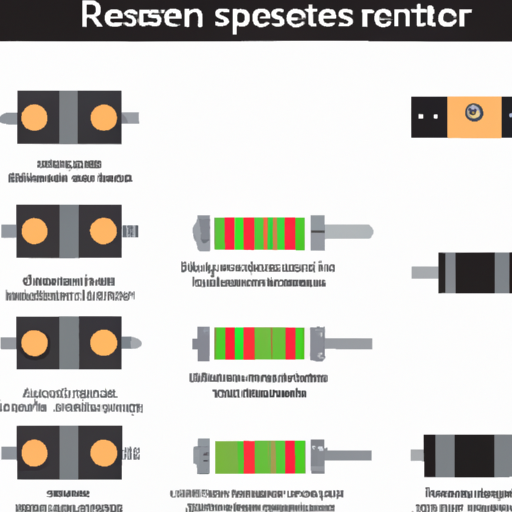
Power resistors come in various types, each with unique characteristics and applications. Understanding these differences is crucial for selecting the right resistor for specific needs.
Choosing the appropriate power resistor can significantly impact the performance and reliability of electrical circuits. Engineers must consider various factors to ensure optimal performance.
As technology advances, power resistors will continue to evolve, with trends focusing on miniaturization, improved thermal management, and enhanced performance characteristics. Staying informed about these developments will help engineers make better choices in their designs.
1. "Resistor Technology: A Comprehensive Guide" - [Link]
2. "Understanding Power Resistors" - [Link]
1. IEC 60115 - Resistors for use in electronic equipment
2. MIL-PRF-55182 - Resistors, Fixed, Film, and Wirewound
By understanding the various types of power resistors and their applications, engineers can make informed decisions that enhance the performance and reliability of their electrical circuits.