Language:en 
- zh-cn
- en
- ja
- fr
- ko
- de
- pt-pt
- es
FLAM Electronics



Photoresistors, also known as light-dependent resistors (LDRs), are electronic components that change their resistance based on the intensity of light falling on them. These devices play a crucial role in various applications, from consumer electronics to industrial automation. As the demand for light-sensitive devices continues to grow, understanding the production process of photoresistors becomes increasingly important. This blog post will explore the mainstream photoresistor production process, detailing the materials, techniques, and quality control measures involved.
Photoresistors are passive electronic components that exhibit a change in resistance when exposed to light. The fundamental principle behind their operation is photoconductivity, where the absorption of photons generates charge carriers, leading to a decrease in resistance.
When light strikes a photoresistor, it excites electrons in the semiconductor material, allowing them to move freely and conduct electricity. This property makes photoresistors ideal for applications where light detection is essential.
There are several types of photoresistors, with the most common being cadmium sulfide (CdS) and lead sulfide (PbS) photoresistors. Cadmium sulfide is widely used in consumer electronics due to its sensitivity to visible light, while lead sulfide is more effective in infrared applications. Additionally, organic photoresistors are emerging as a flexible and environmentally friendly alternative.
Photoresistors find applications across various industries:
In consumer electronics, photoresistors are used in devices such as automatic brightness control in screens, light-sensitive alarms, and garden lights that turn on at dusk.
In the automotive sector, photoresistors are employed in automatic headlights and dashboard lighting systems, enhancing safety and convenience.
In industrial settings, photoresistors are utilized for monitoring light levels in manufacturing processes, ensuring optimal conditions for production.
Photoresistors also play a vital role in environmental monitoring, where they are used to measure light levels in various ecosystems, contributing to research and conservation efforts.
The production of photoresistors relies on specific raw materials, primarily semiconductor compounds and conductive polymers.
Cadmium sulfide and lead sulfide are the most commonly used semiconductor materials in photoresistor production. These materials exhibit the necessary photoconductive properties required for effective light detection.
Conductive polymers are increasingly being explored as alternatives to traditional semiconductor materials. They offer flexibility and can be processed at lower temperatures, making them suitable for various applications.
The sourcing of raw materials is critical to ensuring the quality and performance of photoresistors. Manufacturers must establish reliable supply chains and implement stringent quality control measures to verify the purity and consistency of the materials used.
With growing environmental concerns, manufacturers are increasingly considering the ecological impact of their material choices. The use of cadmium, for instance, raises toxicity issues, prompting research into safer alternatives.
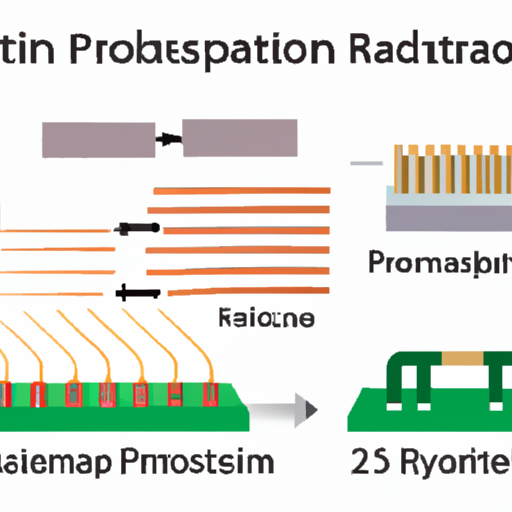
The production of photoresistors involves several key stages, each contributing to the final product's performance and reliability. The main stages include material preparation, substrate preparation, deposition techniques, patterning and etching, doping and activation, and packaging.
The first step in the production process is the purification of raw materials. This involves removing impurities that could affect the performance of the photoresistor.
Once purified, the semiconductor compounds are synthesized through chemical processes, ensuring the desired properties are achieved.
Photoresistors can be fabricated on various substrates, including glass, plastic, and silicon. The choice of substrate depends on the intended application and desired properties of the final product.
Before deposition, substrates undergo cleaning and surface treatment to remove contaminants and enhance adhesion.
PVD is a widely used technique for depositing thin films of semiconductor materials onto substrates. This method involves vaporizing the material and allowing it to condense on the substrate surface.
CVD is another common deposition technique that involves chemical reactions to produce thin films. This method allows for precise control over the film's composition and thickness.
Screen printing is often used for applying conductive polymers, providing a cost-effective and scalable method for production.
Photolithography is employed to create patterns on the photoresistor surface. This process involves applying a photosensitive material, exposing it to light, and developing the pattern.
After patterning, etching techniques, both wet and dry, are used to remove unwanted material, defining the photoresistor's structure.
Doping involves introducing specific impurities into the semiconductor material to enhance its conductivity. This step is crucial for optimizing the photoresistor's performance.
Activation processes, such as thermal treatment or laser activation, are employed to ensure that the dopants are effectively integrated into the semiconductor lattice.
Once the photoresistors are fabricated, they are encapsulated to protect them from environmental factors. Various encapsulation methods are used, including epoxy and silicone coatings.
Before reaching the market, photoresistors undergo rigorous quality assurance and testing to ensure they meet performance standards.
Quality control is essential in photoresistor production to ensure that the devices perform reliably in their intended applications. Manufacturers implement strict quality control measures throughout the production process.
Light sensitivity tests are conducted to evaluate how effectively a photoresistor responds to varying light levels.
Resistance measurements are taken to assess the electrical properties of the photoresistor, ensuring it meets specified standards.
Manufacturers must comply with industry standards to ensure the safety and reliability of their products. This includes adherence to regulations such as RoHS (Restriction of Hazardous Substances) and WEEE (Waste Electrical and Electronic Equipment).
The production of photoresistors can have environmental implications, particularly concerning the use of hazardous materials like cadmium. Manufacturers are increasingly adopting sustainable practices to minimize their ecological footprint.
Safety measures are crucial in handling raw materials, especially toxic substances. Proper training and protective equipment are essential to ensure worker safety.
Compliance with environmental regulations is vital for manufacturers. Adhering to standards such as RoHS and WEEE helps mitigate the environmental impact of electronic waste.
The future of photoresistor production is likely to see innovations in materials and processes, including the development of new semiconductor compounds and more efficient manufacturing techniques.
Nanotechnology is expected to play a significant role in enhancing the performance of photoresistors, enabling the creation of smaller, more sensitive devices.
As the demand for smart devices and automation continues to rise, the market for photoresistors is expected to grow, driving further advancements in production techniques.
In conclusion, the production process of photoresistors is a complex and multifaceted endeavor that involves careful selection of materials, precise manufacturing techniques, and rigorous quality control. As technology continues to evolve, the significance of photoresistors in modern applications will only increase. Understanding this production process not only highlights the intricacies involved but also underscores the importance of these devices in our daily lives and the future of technology.
- Academic journals and articles on semiconductor materials and photoresistor technology.
- Industry reports detailing market trends and innovations in electronic components.
- Relevant books and publications on photoconductivity and electronic manufacturing processes.
This comprehensive overview of the mainstream photoresistor production process provides valuable insights into the materials, techniques, and considerations that shape this essential component of modern technology.