Language:en 
- zh-cn
- en
- ja
- fr
- ko
- de
- pt-pt
- es
FLAM Electronics



Capacitors are fundamental components in electrical circuits, serving various roles from energy storage to filtering signals. Among the different configurations of capacitors, parallel capacitors are particularly significant due to their ability to increase total capacitance while maintaining the same voltage rating. This blog post will explore the important product categories of parallel capacitors, their characteristics, applications, and the factors influencing their selection.
Capacitance is the ability of a capacitor to store electrical energy in an electric field, measured in farads (F). The functionality of capacitors in circuits is primarily to store and release energy, filter signals, and stabilize voltage levels.
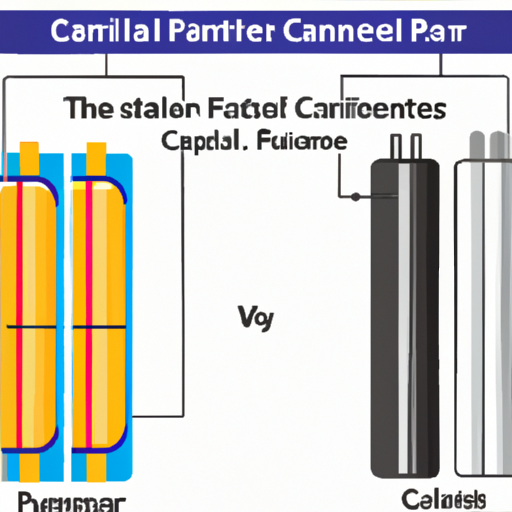
When capacitors are connected in parallel, the total capacitance is the sum of the individual capacitances. This configuration allows for increased capacitance without altering the voltage across each capacitor. The advantages of using parallel capacitors include improved performance in filtering applications, enhanced energy storage capabilities, and greater reliability in circuit designs.
Electrolytic capacitors are polarized capacitors that offer high capacitance values in a relatively small package. They are commonly used in power supply circuits for smoothing and filtering applications.
**Characteristics and Applications:** Electrolytic capacitors typically have capacitance values ranging from microfarads (µF) to thousands of microfarads. They are widely used in power supply circuits, audio equipment, and energy storage applications.
**Advantages and Limitations:** The primary advantage of electrolytic capacitors is their high capacitance-to-volume ratio. However, they have limitations, including a shorter lifespan and sensitivity to temperature and voltage fluctuations.
Ceramic capacitors are non-polarized capacitors made from ceramic materials. They are available in various types, including Class 1 (temperature stable) and Class 2 (high capacitance).
**Types of Ceramic Capacitors:** Class 1 capacitors are used in precision applications, while Class 2 capacitors are suitable for general-purpose applications due to their higher capacitance values.
**Applications in Various Industries:** Ceramic capacitors are widely used in consumer electronics, automotive applications, and telecommunications due to their reliability and stability.
Film capacitors are made from thin plastic films and are known for their stability and low loss characteristics.
**Types of Film Capacitors:** Common types include polyester, polypropylene, and polycarbonate capacitors, each with unique properties suited for different applications.
**Benefits and Use Cases:** Film capacitors are ideal for applications requiring high voltage and low distortion, such as audio equipment, power electronics, and motor drives.
Tantalum capacitors are known for their high capacitance and reliability. They are often used in applications where space is limited.
**Properties and Applications:** Tantalum capacitors have a stable capacitance over a wide temperature range and are commonly used in portable electronics, medical devices, and aerospace applications.
**Comparison with Other Capacitor Types:** Compared to electrolytic capacitors, tantalum capacitors offer better performance in terms of stability and reliability, although they are generally more expensive.
Supercapacitors, also known as ultracapacitors, are energy storage devices that bridge the gap between traditional capacitors and batteries.
**Definition and Functionality:** Supercapacitors can store large amounts of energy and release it quickly, making them ideal for applications requiring rapid charge and discharge cycles.
**Applications in Energy Storage:** They are widely used in renewable energy systems, electric vehicles, and backup power supplies due to their ability to provide high power density and long cycle life.
Mica capacitors are known for their excellent stability and low loss characteristics, making them suitable for high-frequency applications.
**Characteristics and Applications:** Mica capacitors are often used in RF applications, oscillators, and precision timing circuits due to their reliability and performance.
**Advantages in High-Frequency Applications:** Their low dielectric loss and high insulation resistance make them ideal for applications where signal integrity is critical.
When selecting parallel capacitors, several factors must be considered to ensure optimal performance in a given application.
The voltage rating of a capacitor indicates the maximum voltage it can handle without failure. It is crucial to select capacitors with a voltage rating higher than the maximum voltage in the circuit.
The required capacitance value depends on the specific application. Higher capacitance values are needed for energy storage, while lower values may suffice for filtering applications.
The temperature coefficient indicates how capacitance changes with temperature. Selecting capacitors with appropriate temperature coefficients ensures stable performance across varying environmental conditions.
ESR is a critical parameter that affects the efficiency and performance of capacitors, especially in high-frequency applications. Lower ESR values are preferred for better performance.
The physical size and form factor of capacitors can impact circuit design and layout. Smaller capacitors are often preferred in compact electronic devices.
Parallel capacitors find applications in various fields, including:
In power supply circuits, parallel capacitors are used to smooth out voltage fluctuations and reduce ripple, ensuring stable power delivery.
Capacitors are used to couple and decouple signals in audio and communication systems, allowing for the transmission of AC signals while blocking DC components.
In timing circuits, capacitors work with resistors to create time delays, enabling precise control in applications such as oscillators and timers.
Parallel capacitors are integral to energy storage systems, providing quick bursts of energy when needed, such as in regenerative braking systems in electric vehicles.
In electric motors, parallel capacitors are used to provide the necessary starting torque and improve efficiency during operation.
The field of capacitor technology is evolving, with several trends shaping the future of parallel capacitors.
Research into new materials is leading to the development of capacitors with improved performance characteristics, such as higher capacitance and lower ESR.
As electronic devices become smaller, the demand for miniaturized capacitors is increasing. Integration of capacitors into circuit boards is also becoming more common.
With growing concerns about environmental impact, manufacturers are focusing on developing eco-friendly capacitors that reduce waste and energy consumption.
The rise of renewable energy sources is driving demand for capacitors in energy storage systems, grid stabilization, and electric vehicle applications.
In summary, parallel capacitors play a vital role in modern electronics, with various product categories each offering unique characteristics and applications. Understanding the different types of capacitors, their advantages, and the factors influencing their selection is essential for engineers and designers. As technology continues to advance, the importance of parallel capacitors in enhancing circuit performance and enabling new applications will only grow.
- Academic Journals
- Industry Reports
- Manufacturer Specifications
- Online Resources and Databases
This comprehensive overview of parallel capacitors highlights their significance in electrical circuits and the diverse product categories available. By understanding these components, professionals can make informed decisions in their designs and applications.